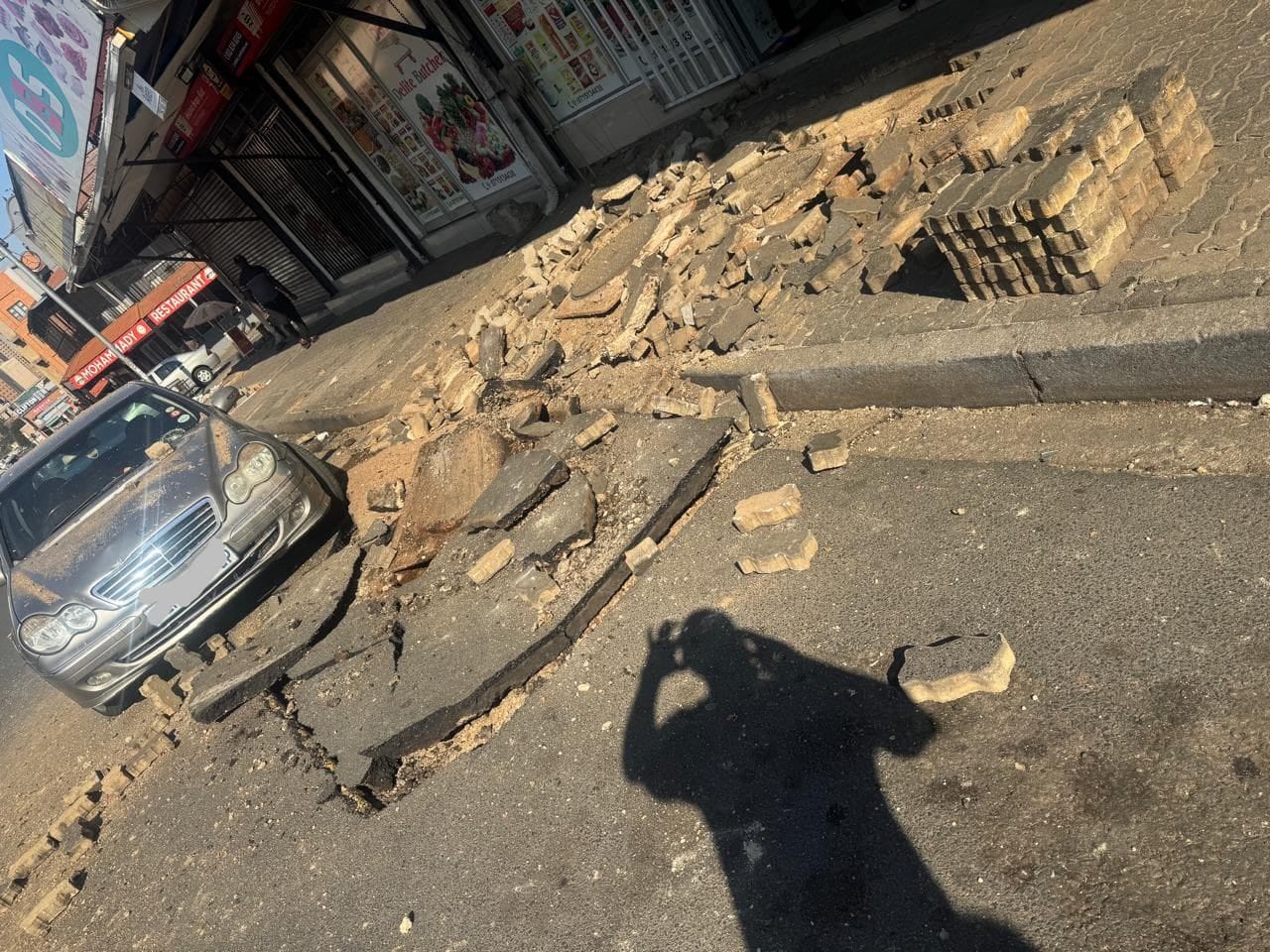

City Power seizes 12 tons of illegal electricity cables in Slamdam, Tshepisong
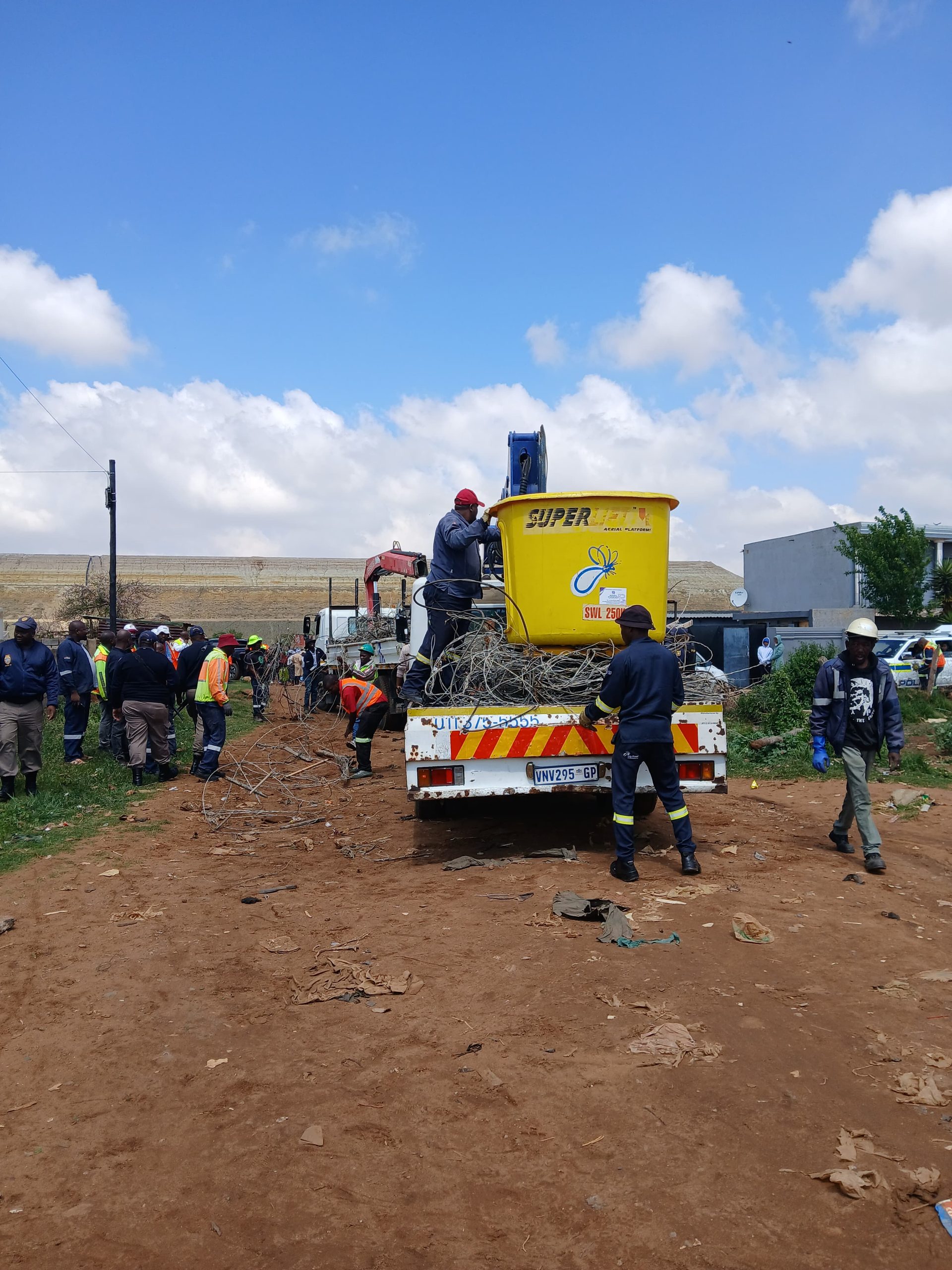
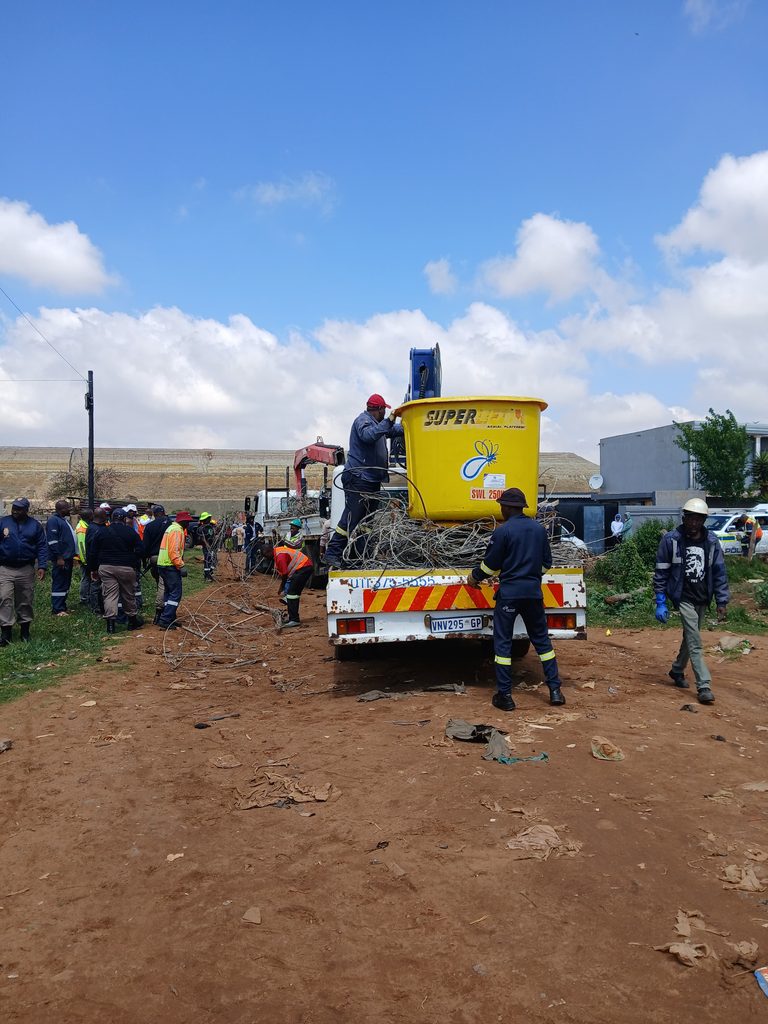
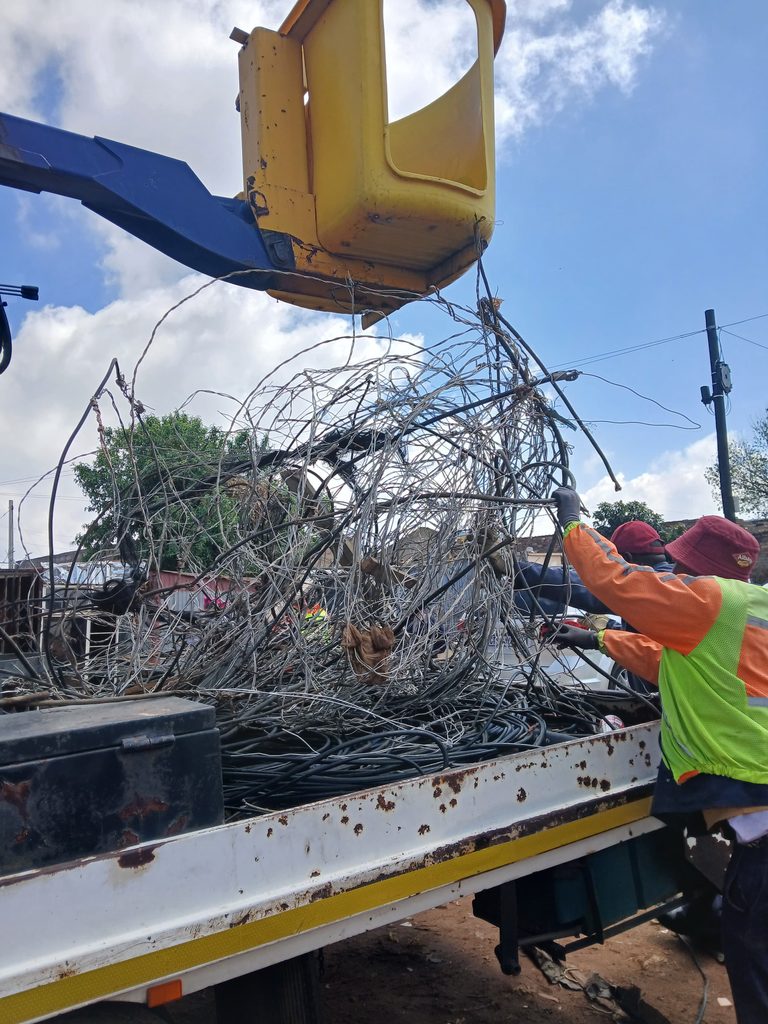
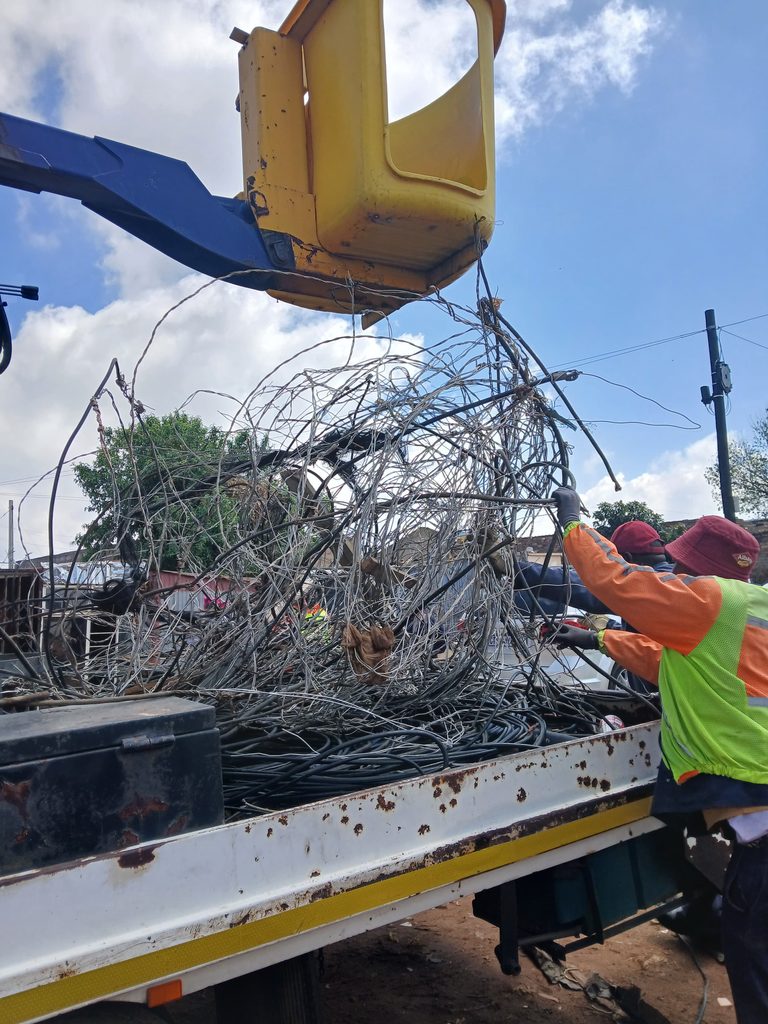
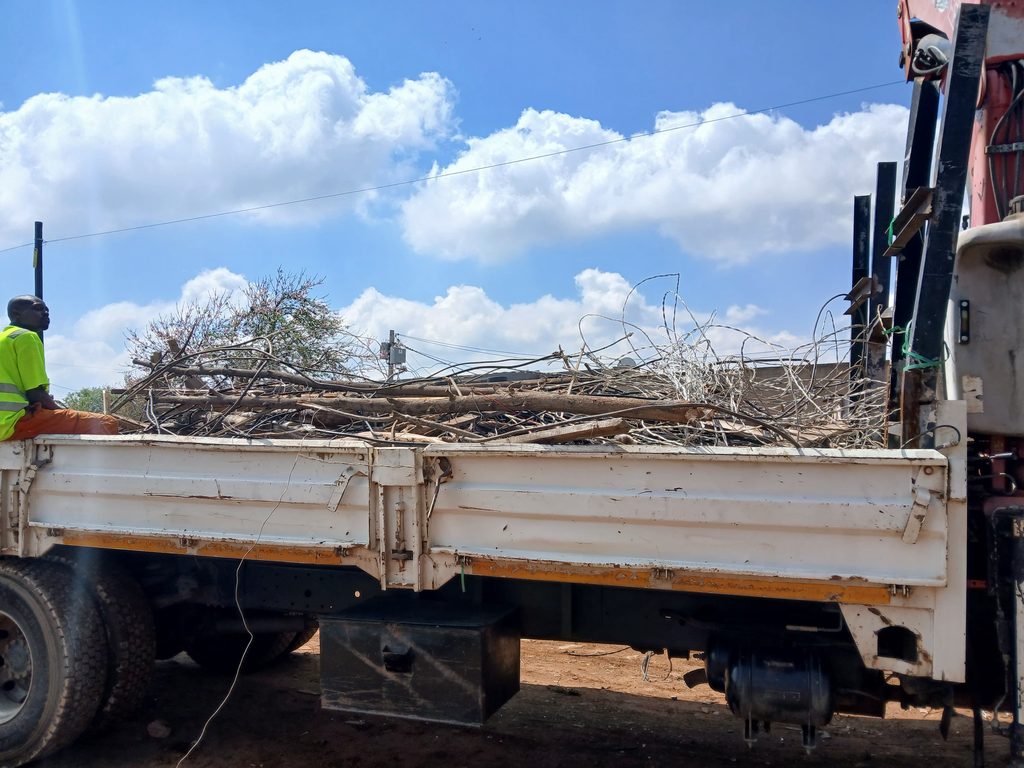
City Power has confiscated approximately 12 tons of illegal electricity cables, with an estimated value of R250,000, during an operation targeting illegal electricity connections in the Slamdam informal settlement in Tshepisong, Roodepoort.
The operation, conducted this morning, 15 September 2026, was carried out in collaboration with the South African Police Service (SAPS), Johannesburg Metropolitan Police Department (JMPD), the Department of Home Affairs and other relevant stakeholders.
The operation forms part of City Power’s ongoing efforts to root out illegal electricity connections, protect electricity infrastructure and address the factors contributing to repeated power supply interruptions in Tshepisong.
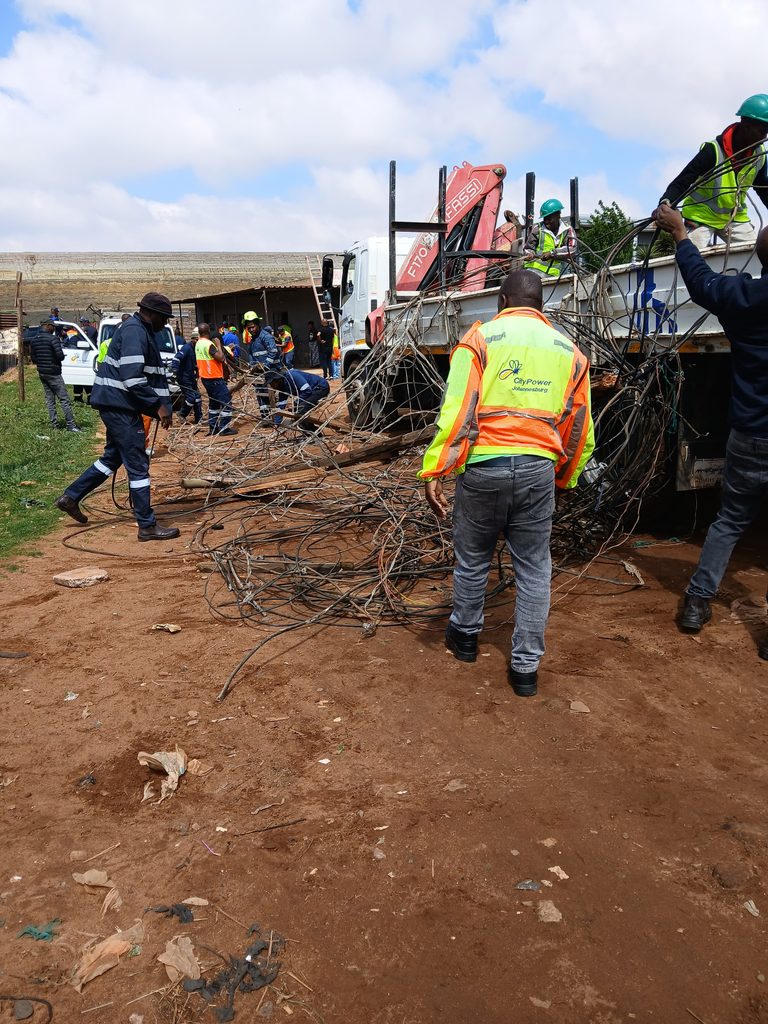
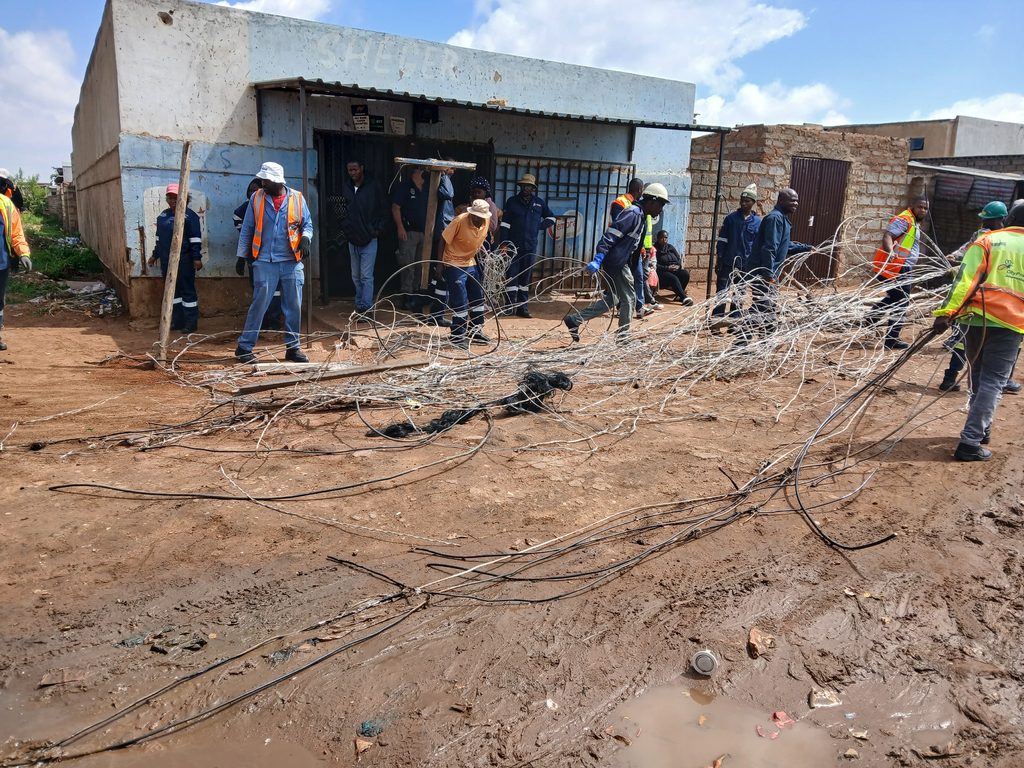
During the operation, City Power teams encountered an extensive network of unsafe and makeshift electricity connections across the informal settlement. Bare electricity cables were found running loosely between makeshift wooden poles, structures and along pathways, with exposed and tangled cables lying on the ground.
The condition of the network presents serious safety risks to residents, City Power employees and other people moving through the area, while also placing uncontrolled loads on the electricity network.
These types of illegal connections can contribute to overloaded transformers, damaged infrastructure, electrical fires, electrocution and repeated unplanned power interruptions. The unsafe condition of the infrastructure also makes it difficult for City Power technicians to operate and maintain the network safely.
The operation comes just over three weeks after City Power engaged residents during an Electricity Imbizo in Tshepisong. During the engagement, residents raised serious concerns around electricity reliability, damaged infrastructure, illegal connections, metering issues and the long-term sustainability of the electricity supply.
Following the engagement, City Power committed to implementing a phased normalisation programme in Tshepisong. The intervention, however, cannot simply be about replacing failed equipment. City Power has to address the underlying causes of repeated network failures if it is to create a sustainable electricity supply for the community.
Following the Imbizo in Tshepisong on 27 August 2026, City Power moved into infrastructure interventions in the area. A total of six transformers have since been replaced as part of efforts to stabilise the electricity network and improve supply in the affected areas.
City Power continues to be candid about the challenges facing the Tshepisong electricity network. Replacing infrastructure alone will not solve the current problem. If a transformer is replaced today but illegal connections continue to overload the network, the same infrastructure can fail again. This is why City Power has structured its intervention as a normalisation programme, rather than simply responding to individual equipment failures.
The normalisation programme looks at the condition of the electricity infrastructure, customer meters, customer compliance, illegal connections and the long-term sustainability of the electricity supply. The programme will run over the next six months.
City Power has already started work in Tshepisong West, Phase 7, where technicians have been on the ground conducting meter audits ahead of the normalisation work. The objective is therefore not simply to restore electricity after a failure. The intention is to address the conditions that continue to undermine the stability and sustainability of the network.
City Power Acting CEO Charles Tlouane said the operation is necessary to protect the network and communities but stressed that enforcement must form part of a broader intervention to address the underlying challenges in Tshepisong.
“We want to provide electricity to the people of Tshepisong, and we want that electricity to be safe, reliable and sustainable. But we cannot simply replace a transformer or install infrastructure and expect the problem to disappear while illegal connections continue to overload the network. We have to address the root causes of these failures, and that requires City Power, the community and other government stakeholders to work together.”
City Power wants to be clear that its objective is to provide communities with a safe, reliable and sustainable electricity supply. However, providing a conventional formal electricity network to an informal settlement such as Slamdam is not as simple as installing electricity infrastructure.
There are broader issues that must first be addressed, including human settlements planning, land-use considerations, the formalisation of the settlement, safety requirements and the provision of basic infrastructure.
These matters require the involvement of Human Settlements and other relevant government departments and entities.
Where informal settlements are established in areas that have not been formally planned or proclaimed for residential development, City Power faces significant limitations in installing and maintaining a conventional formal electricity network.
Tlouane said the situation in informal settlements such as Slamdam requires a coordinated government response that goes beyond the electricity network itself.
“City Power cannot resolve the challenges of an informal settlement on its own. There are important human settlements, land-use, planning and formalisation issues that must be addressed before we can establish a conventional, sustainable electricity network. Our position is not that we do not want to provide electricity. We want to provide electricity, but we need the necessary conditions to be created for us to do so safely, legally and sustainably. That is why the normalisation programme and the involvement of our government partners are so important.”
The situation in Slamdam therefore cannot be resolved by City Power alone. While City Power has a responsibility to maintain and invest in its electricity network, broader human settlements, land-use and planning matters must also be addressed to create a sustainable basis for formal electricity provision.
The operation also received support from the leadership of the City of Johannesburg. Speaker of Council, Cllr Margaret Arnolds, was present during the operation and highlighted the support of the City’s political leadership for City Power’s efforts to improve electricity supply, enhance safety and strengthen revenue collection.
“This operation is not to spite anybody. It is an operation to deal with the issue of stable electricity supply, safety and revenue collection, so that we can have a Johannesburg we all want to live in,” said Arnolds.
Local Councillor McDonald Galeshewe also addressed residents during the operation and assured them that efforts would be made to assist the community towards the electrification of the area, while emphasising that this must happen through the appropriate processes and in consultation with the relevant government stakeholders.
The message to residents was also that the removal of illegal connections does not give anyone the right to reconnect themselves. Residents were warned that self-reconnection is dangerous, undermines the normalisation process and could result in criminal consequences.
“Don’t go there to reconnect yourselves because if you do you will be arrested,” said Cllr Galeshewe during his address to residents on the sidelines of the operation.
The warning comes as City Power continues to appeal to residents to cooperate with its teams as normalisation and enforcement activities continue. Residents are encouraged to use the appropriate channels to raise electricity concerns and to allow City Power technicians to conduct legitimate audits and interventions.
City Power will continue working with law enforcement agencies, government stakeholders and communities to address illegal connections, protect critical electricity infrastructure and improve electricity supply across Johannesburg.
City Power urges residents not to make, use or facilitate illegal electricity connections and to work with the entity and law enforcement agencies to create safer communities and protect electricity infrastructure.
Residents can report illegal connections, cable theft, vandalism and other suspicious activities involving electricity infrastructure to the City Power Security Risk Management Control Room on 011 490 7900, 011 490 7911 or 011 490 7553, or via WhatsApp on 083 579 4497