ADDRESS BY SIHLE ZIKALALA, DEPUTY MINISTER OF PUBLIC WORKS AND INFRASTRUCTURE DURING THE BUDGET VOTE IN THE NCOP
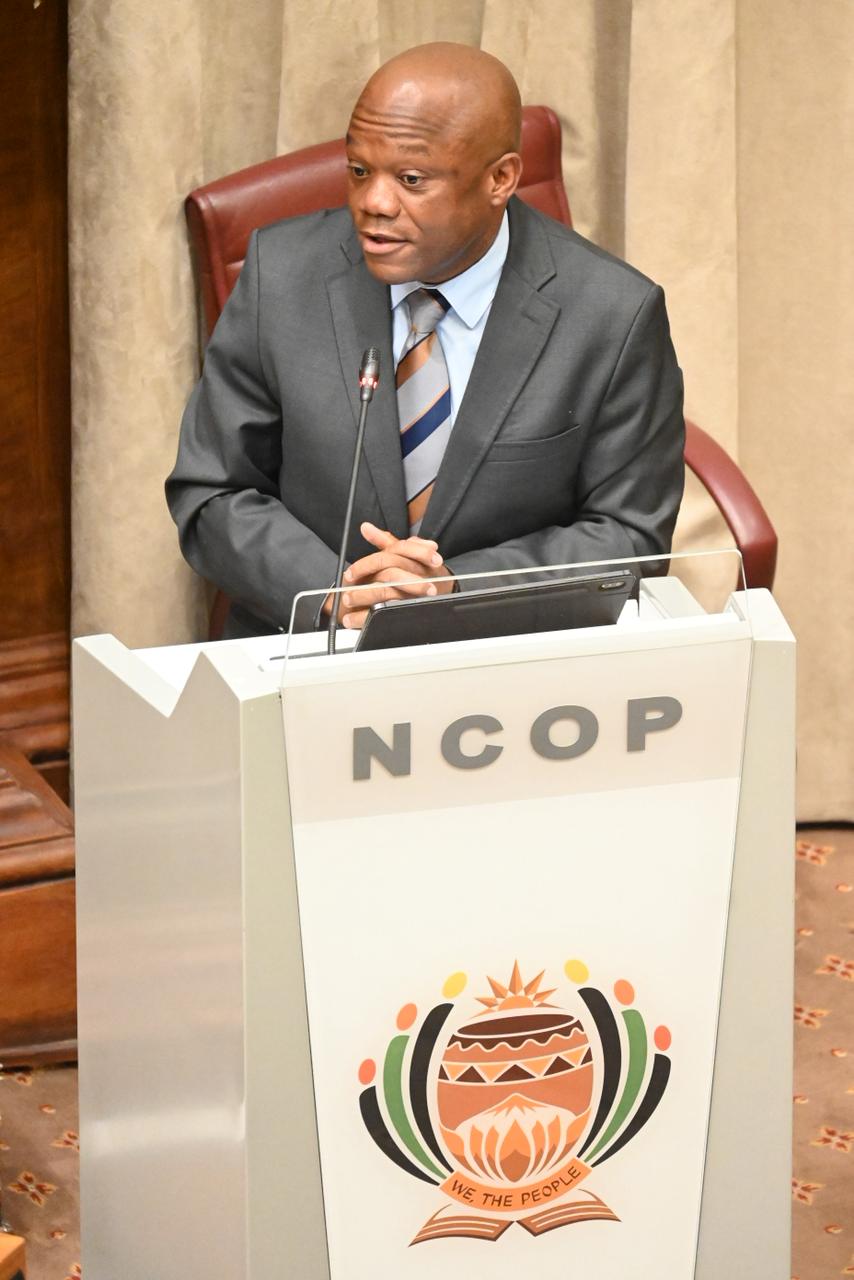
YOUTH MONTH AND 30 YEARS OF THE SA CONSTITUTION Honourable Chairperson, we have gathered during Youth Month to deliver the Budget Vote of the Department of Public Works and Infrastructure to the National Council of Provinces (NCOP).
We pay tribute to the heroic youth of 1976 which 50 years ago, paid the supreme sacrifice in the noble cause of the liberation of this country from the evil and brutality of apartheid colonialism.
They shared their blood for the ideal of a South Africa that is truly united, non-racial, non-sexist, democratic and prosperous.
In a year in which our nation commemorates 30 years of our Constitution, we recall the active role of the youth in shaping our Constitution which President Nelson Mandela acknowledged during the 1995 Youth Day Commemorations in Zakheni, KwaZulu-Natal.
Through Professional Services in the Department of Public Works and Infrastructure, we must continue to play our part in supporting young people from impoverished backgrounds who are pursuing STEM subjects in rural and township schools and those taking careers in the built environment to build the skills required to turn every inch of our land into a construction site.
We remain determined to undo the apartheid spatial legacy by prioritising rural infrastructure.
2 Business General At the beginning of June, we learned about the suspension of schools in three districts of the Eastern Cape because of reported inclement weather conditions in Nelson Mandela, Sara Baartman and Buffalo City districts in the Eastern Cape.
CONNECTING COMMUNITIES AND IMPROVING PUBLIC SAFETY THROUGH WELISIZWE BRIDGES Climate change is a global threat that we must collectively fight with our traditional leaders, communities, all spheres of government, and the private sector.
To enhance the safety of learners on rainy days when they travel to schools, the Department of Public Works and Infrastructure continues to roll out the Welisizwe Rural Bridges Programme in the Eastern Cape, KwaZulu-Natal, Free State, North West, Limpopo, and Mpumalanga.
We are overcoming challenges such as shortages of construction plant, hijacking of equipment, harsh weather conditions, and exorbitant rates requested by local suppliers.
The Welisizwe programme has made significant strides in enhancing rural connectivity, with 122 bridges completed across all these six provinces. No less than 49 bridges are currently under construction, and 119 under planning. Plans are underway to remediate and activate bridge sites through a dedicated recovery plan. Phase One of the programme is on track for completion in September 2027.
Plans are now well advanced in consultation with the Department of Transport for the submission of the Phase Two application which will provide for the construction of additional rural bridges and the expansion of the Welisizwe programme to the Northern Cape, Western Cape, and Gauteng.
SMALL HARBOUR DEVELOPMENT
Honourable Members, on Small Harbour development, we can report that Spatial and Economic Development Frameworks (SEDFs) have been completed for Tier 1 sites in the Northern Cape (Port Nolloth), Eastern Cape (Port St Johns) and Kwa-Zulu Natal (Port Shepstone).
3 Business General SEDFs were also completed for the Tier 2 sites including Hondeklipbaai in the Northern Cape, Hamburg and Mbizana in the Eastern Cape and Port Edward and Hibberdene in Kwa-Zulu Natal.
The building of these small harbours in these coastal provinces which were neglected under apartheid except the Western Cape will be a game changer and transformation of the oceans economy while improving food security, local economic development, and tourism.
CONTRACTOR DEVELOPMENT: A CORNERSTONE FOR TRANSFORMATION AND JOB CREATION South Africa cannot achieve inclusive economic growth or reduce our high rates of unemployment without strengthening the construction industry and supporting the contractors who drive infrastructure delivery.
In line with the Constitutional injunction of equality and the UN’s call of leaving no one behind, the Department is undeterred to increase the participation of Black people, women, youth, military veterans and People Living With Disabilities in the construction and property sectors.
The cidb’s Construction Monitor released at the beginning of the year shows that black-owned contractors account for approximately 65% of registered contractors overall, and participation at higher contractor grades remains significantly lower.
Youth-owned contractors remain critically underrepresented at approximately 10% across Grades 2 to 9.
Women-owned enterprises average only 26% across the sector.
Black-owned contractors access only around 45% of public sector awards, while women-owned contractors access approximately 15%.
We commend the Department and the CIDB for its renewed energy on contractor development as we travel all provinces to empower emerging contractors. Contractor development outreach has been conducted in Kwa-Zulu Natal, Eastern Cape and Northern Cape and Gauteng will take place on 26 June 2026. Around 1500 contractors have been capacitated through the Contractor Development Outreach project led by the Deputy Minister.
4 Business General The B.U.I.L.D Programme is the cidb’s primary vehicle for building a capable and sustainable construction industry.
In the year under review, no less than 240 clients and 350 contractors were trained in construction management.
The cidb has published the Contractor Management Guidelines (CMG 101) which is an entry-level construction and business management guide to build basic contractor capability, especially for emerging contractors at the cidb Grade 1 level.
Through the cidb, we continue to expand support to emerging contractors addressing technical and enterprise sustainability.
At least 500 people have already been trained through the Skills Development Standard.
On 12 May 2026, in partnership with the Department of Small Business Development, we launched the cidb–SEDFA Construction Fund to the value of R300-million.
This Construction Fund is designed to provide blended finance solutions to support contractor sustainability, infrastructure delivery readiness, working capital requirements, and long-term enterprise growth.
Using the Fund, we want to increase growth, drive transformation, and support inclusive participation in the construction sector.
The Fund also includes structured non-financial support interventions such as mentorship, technical support, business support, investment monitoring, and market access facilitation.
THE IDT AND DELIVERY OF SOCIAL INFRASTRUCTURE Honourable Members, the IDT continues to assist our government in the delivery of social infrastructure including health facilities, courts, libraries, and schools.
During the 2025/26 financial year, the IDT completed 279 social infrastructure facilities, exceeding the target of 244 facilities. During the same period, 39 contracts were awarded under the Contractor Development Program (CDP).
To support job creation and protect the vulnerable, 45 582 work opportunities were created through the Expanded Public Works Programee (EPWP) while 3031 work opportunities were created through the IDT portfolio. The IDT plans to deliver almost 35 000 work opportunities during the 2026/27 financial year to cushion the poor against poverty.
5 Business General Procurement and expenditure performance regarding the designated groups remained strong, with R3.169 billion awarded, of which 44% went to designated groups, exceeding the 40% target. Expenditure totalled R3.395 billion, with 54% spent on designated groups, supporting continued transformation outcomes.
In the 2026/27 financial year, IDT plans to complete 164 social infrastructure facilities.
One of the most notable projects to be completed is the Sarah Baartman Centre for Remembrance, which will honour mama Baartman’s Khoisan heritage and restore her dignity after it was violated in major capitals of Western Europe.
The Acacia residential project is ready to commence which will see the demolishing of 112 prefabricated asbestos houses and the construction of 113 three-bedroom brick houses.
The entity’s performance shows improvement. Client confidence is being restored and practical steps are taken to improve audit outcomes.
SUPPORTING INNOVATION AND SUSTAINABILITY THROUGH AGREMENT SOUTH AFRICA (ASA) One of DPWI’s prized entities and a national treasure is Agrément South Africa (ASA).
Since its foundation in 1969, ASA has been at the centre of certifying non-standardized construction products and systems. Today, the entity is at the heart of supporting innovation and sustainable, climate-resilient building materials to improve public safety and environmental protection.
We call on the NCOP to supUport the entity in its efforts to drive promote safe, sustainable construction materials and systems in the public sector.
In the 2025/26 financial year, ASA issued 19 certificates covering building systems, sanitation products, road products, and roofing products. 100% of certificates were amended to meet relevant technical and administrative requirements.
ASA conducted quality and compliance inspections on 88 certificates, against a target of 92 valid certificates, achieving 96% performance.
6 Business General The Department is currently consulting on the proper legislative amendment to make certification of construction products and systems mandatory, a departure from voluntary certification aimed at strengthening safety, enterprise development, localization and job creation.
THE PROFESSIONALISATION PROGRAMME AND TECHNICAL CAPACITY BUILDING OF THE PUBLIC SECTOR DPWI’s Council for the Built Environment (CBE) continues to place professional registration, ethical practice, and technical competence at the centre of sector reform.
We commend the CBE for elevating professionalisation from a sector programme to a strategic state-building intervention directly linked to safer infrastructure, improved service delivery outcomes, and stronger public sector accountability.
The CBE has launched the national professionalisation programme to address the backlog of more than 30,000 candidates currently delayed in the professional registration pipeline.
In the past 3 years, the CBE working with regulatory councils and the sector, has professionalised no less than 10 000 built environment professionals across various disciplines.
The CBE has declared 2026/27 as the Year to Unlock the Barriers to Professional Registration to accelerate registration readiness and strengthen the built skills pipeline.
Well done to the entity for scaling a national Structured Mentorship Programme, with a target of expanding accredited mentors from 235 to 1,000 mentors nationally, supported by the digital strengthening of the Built Environment National Logbook (BENL).
7 Business General RESUSCITATION OF REGIONAL WORKSHOPS Around 2014, DPWI took a decision to phase out workshops and to outsource all construction and maintenance work to the private sector.
In 2024, we took a decision to resuscitate the DPWI workshops and to fund them by reprioritizing funding from under spending infrastructure programmes. Since then, we have resuscitated regional workshops in seven provinces, with a staff complement of no less than 348, excluding cleaners and gardeners.
We are determined to turn a corner from an era of siphoning state resources by unscrupulous private actors through inflated cost of materials, labour, transport and consumables.
BUILDING A CAPABLE, ETHICAL, DEVELOPMENTAL STATE – ADVANCING GOOD GOVERNANCE Honourable Members, collectively, we must build an ethical, developmental state and deepen good governance. We must be honest about this imperative and there must be no holy cows when we see signs of regression.
When Government of National Unity (GNU) came into being, many people applauded the development as critical in the fight against corruption, maladministration and poor performance. In the Portfolio Committee, I have raised several issues relating to abuse of recruitment procedures, political interference, and general maladministration that is deepening in the Department, including the establishment of an illegal unit. Coupled with this, we need urgent intervention to avoid administrative collapse and demoralization of staff which is caused by usurpation of administrative functions by non-administrative personnel.
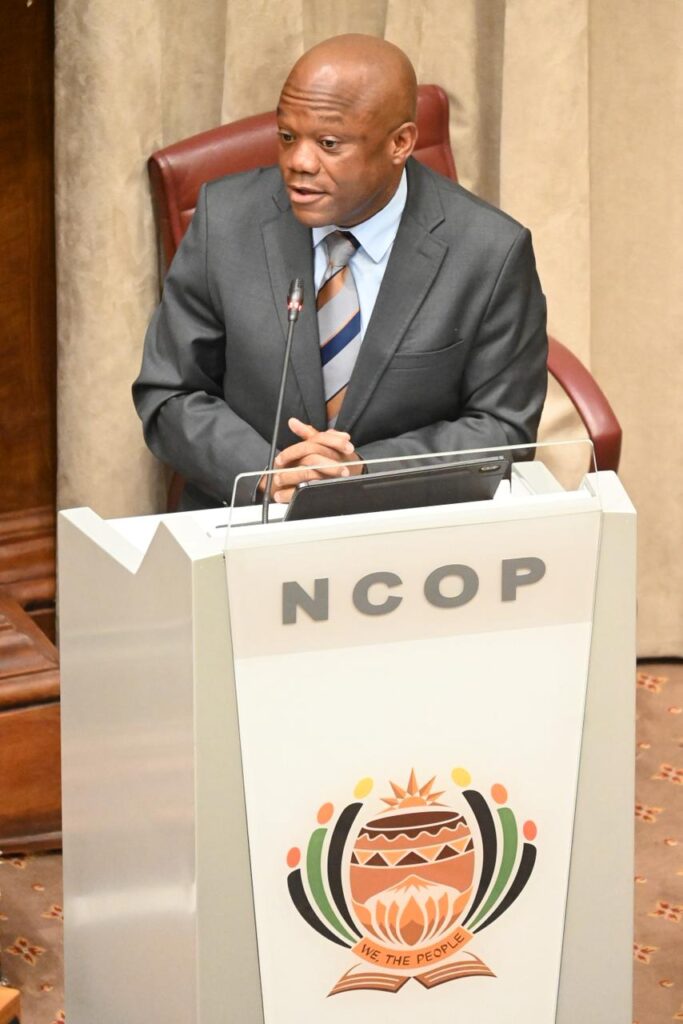
This has transcended the confines of the Department to affect entities of the Department. It is an impassioned plea that we all unite in building a capable, ethical, developmental state. The proclamation to do good does not mean any good has been done, what 8 Business General matters is action taken in the fight against the cancer of corruption, maladministration and underperformance